

02 · Accelerate · Product Accelerator Cohort · January–June 2026
Wood Mackenzie
From delivery-led to discovery-led in six months.
- Client
- Wood Mackenzie, global research and analytics
- Programme
- Product Accelerator Cohort
- Who
- 45 product people. Multi-discipline group.
- When
- January to June 2026
The result in brief
In six months, Wood Mackenzie's product teams moved from delivery-led to discovery-led. They now work from a shared discovery playbook, a common way to talk about confidence and prioritisation, and AI tools they use every day. Their pitches to leadership are built on customer evidence and commercial numbers.
say their discovery is now more structured and consistent
increase in teams now using evidence to stop work, not only to start it
increase in business cases that now carry quantified commercial figures in revenue, retention and cost terms
01/The challenge
Strong at delivery. No shared way of doing discovery.
Wood Mackenzie is a global research and analytics business, “a research company rather than a typical SaaS business”, in the words of Sabah Zdanowska, its VP Product for Power & Renewables. Its product teams were strong at delivery but had no shared way of doing discovery.
Sabah wanted a bespoke programme, not “cookie cutter training”, that would help the team “combine human expertise and AI-enhanced analytics”. Colab’s diagnosis uncovered three themes to focus on.
No common lifecycle. Described how their team moves from idea to launch as ad hoc or inconsistent.
Engineering-led discovery. Said engineers were often or always needed to build a prototype before an idea could be tested.
Weak outcome measurement. Said they never or rarely measured whether what they shipped worked.
The team said it themselves
Discovery has felt more solution led than product led in the last 12 months.
We are asked about timelines and whether we have shipped more so than if we shipped the right thing.
I feel very restricted in rapid prototyping as a PO…
Asked what leadership could provide, one product director answered in a single line: “A playbook!”
02/What we built together
Tools the team would keep using after we left.
We started with diagnosis, then built the tools the team would keep using after we left, and taught them through real work rather than theory. The toolkit had five parts.
A discovery playbook
Built as a live app outlining the core steps, decisions and tools to use, so the team had a common way of running discovery.
A product manager competency framework
It gave every level, from associate product manager to senior vice president, a shared picture of what good looks like.
Success metrics
Each team defined what success looked like, and tracked outcomes rather than just outputs.
The Confidence Meter
Itamar Gilad’s tool for scoring how strong the evidence is behind an idea. It gave the team a common language for prioritisation.
AI tooling
Including Kiro and Gemini Gems for faster prototyping and research, and Amplitude for measurement.
How the programme ran
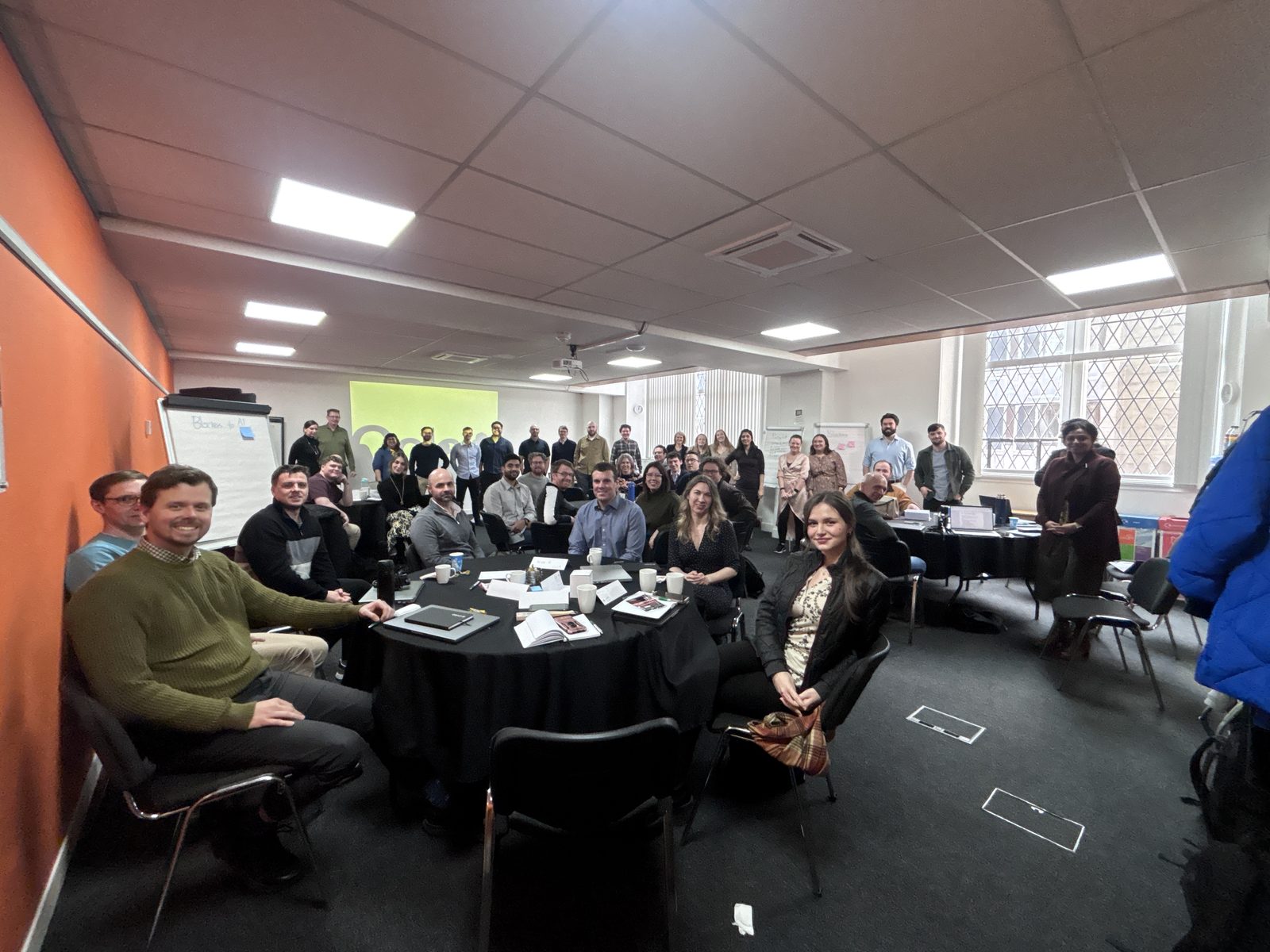
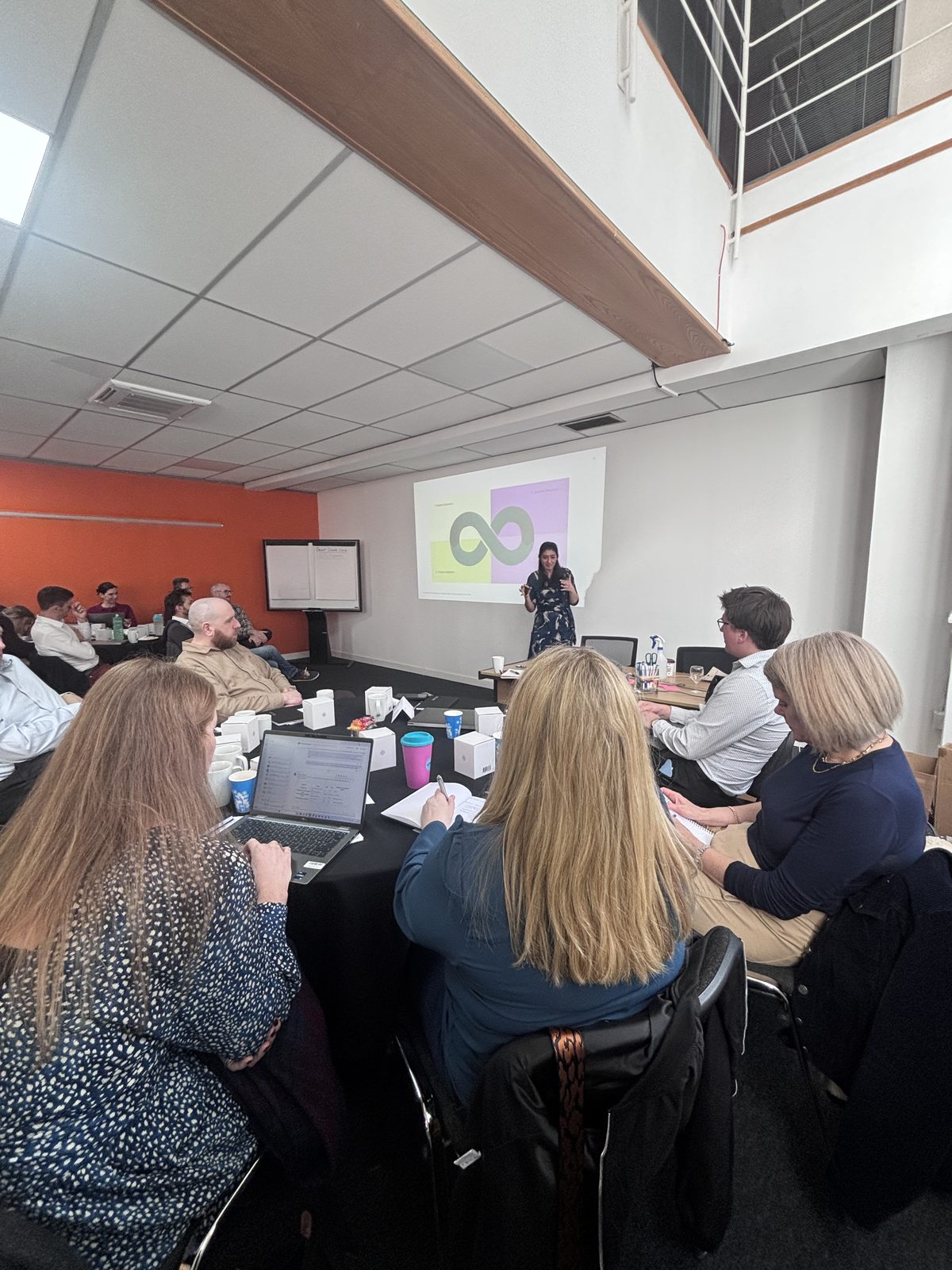
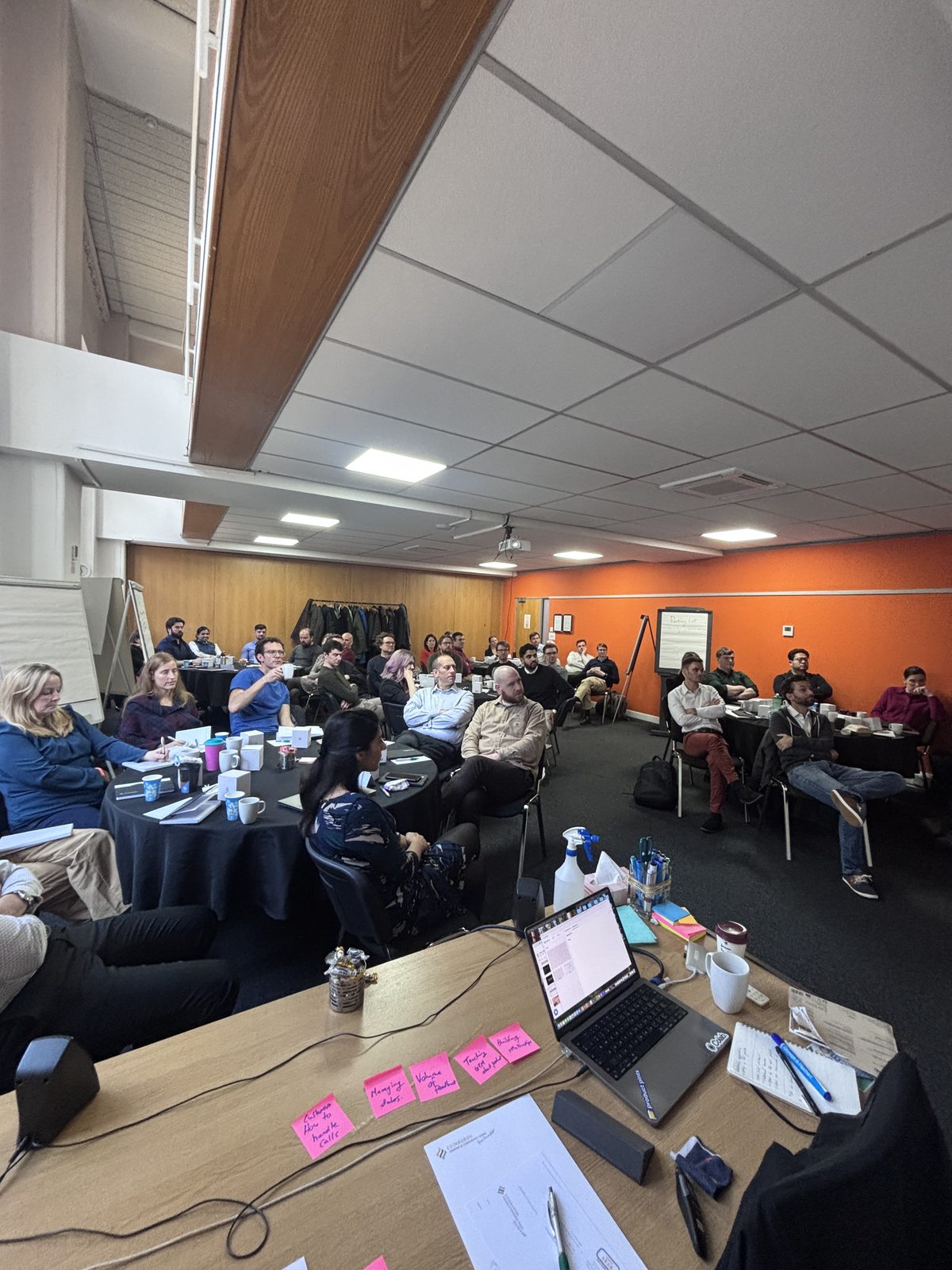
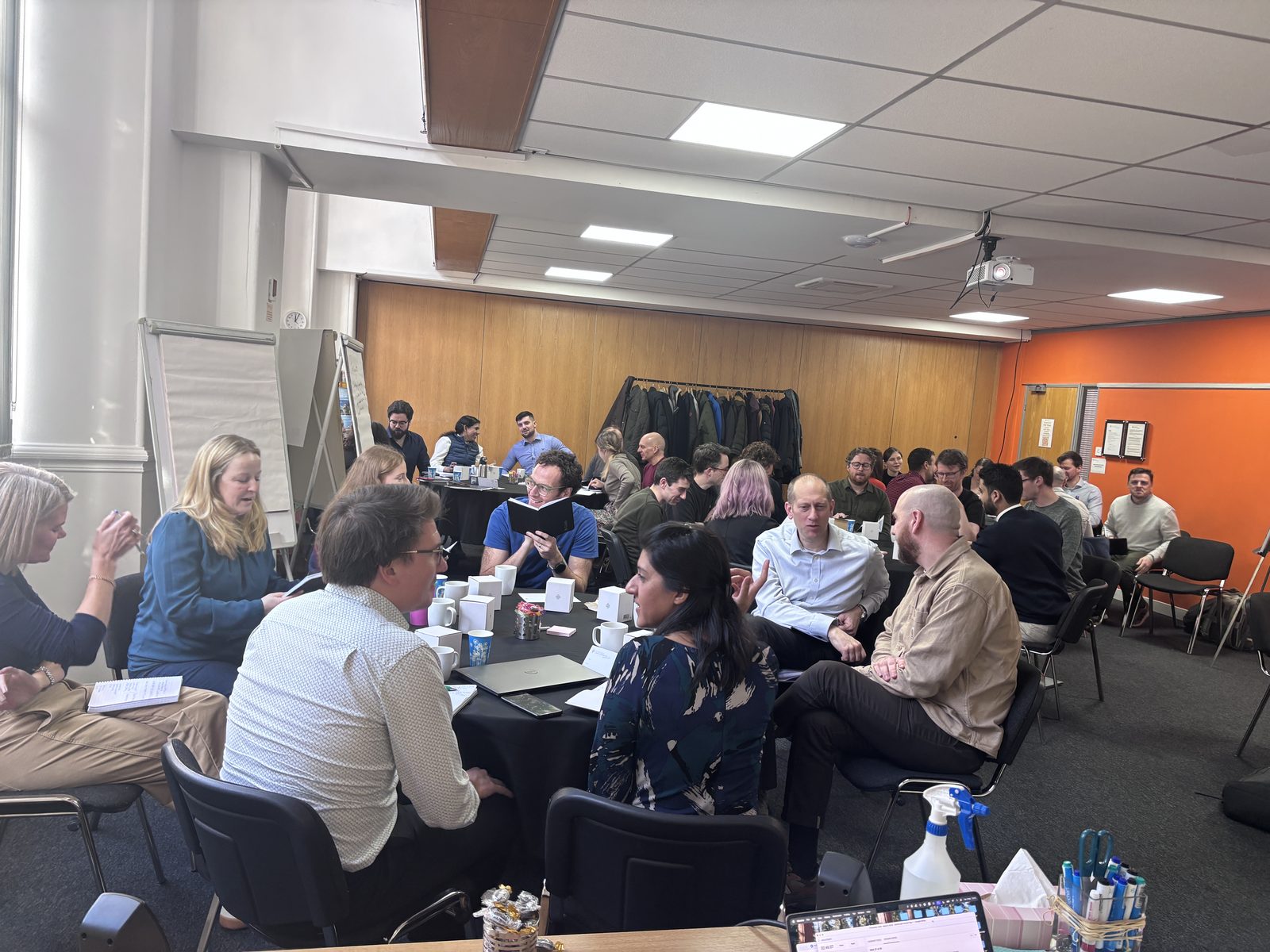
in-person kick-off in Edinburgh
virtual workshops, run fortnightly
office hours, about 70 minutes a week on average
participants, APM to senior PM and director to SVP
Weekly check-ins with an internal champion kept momentum between sessions.
03/How we rolled it out
Six sessions, from AI foundations to a business case.
Six sessions in three units, each building on the last. Every session paired a clear learning outcome with hands-on practice using the tools and playbook.
AI-enabled discovery foundations
Session 1
AI tooling foundations
Learning outcome
Understand AI-powered product workflows
- Kiro 101 training: core workflows and setup
- Steering docs and best practices for vibe coding
Session 2
Gathering insight
Learning outcome
Discovery foundations and insights
- Discovery foundations and insight gathering
- Capturing, synthesising and leveraging insights
Framing and solving strategic problems
Session 3
Opportunity framing and prioritisation
Learning outcome
Frame and prioritise opportunities
- Opportunity framing and identifying growth areas
- Defining success and aligning on outcomes
Session 4
Solution discovery and validation
Learning outcome
Validate solutions rapidly
- No-code testing and lightweight validation
- De-risking ideas early, and pivots
Commercialisation and communication
Session 5
Market sizing, ROI and success metrics
Learning outcome
Translate opportunities into outcomes
- TAM / SAM / SOM and defining success
- Connecting product decisions to commercial outcomes
Session 6
Communication and stakeholder management
Learning outcome
Communicate and drive alignment
- Influencing stakeholders and navigating the organisation
- Driving alignment and effective decision making
Throughout, participants progressed one or more real ideas and built a lightweight business case.
04/Results
Before and after the programme.
Kill or pivot ideas
Use AI tools daily
“Very familiar” with AI in their domain
Some of the biggest shifts were measured after we left, with the team continuing to improve their own product practice.
Discovery is more structured
Say their approach is more structured and consistent than six months ago, with 9 saying significantly more.
Prototyping in product’s hands
Prototype often or always. At the start, 37% rated themselves Practitioner or Expert.
Faster to customer feedback
Get from idea to customer feedback faster.
More confident in their role
Feel more confident in their role.
Commercial thinking in pitches
Rated confidence 7 or higher on both discovery (average 7.3) and commercial thinking (average 6.8).
What the group said about our partnership
“By the end of the programme the product team was able to identify new market opportunities to increase uplift, ways to protect ARR in challenging industries and find operational savings, all through a newly developed discovery playbook.”
“Most product managers were product owners but now had the skills to think commercially and drive decision making based on customer impact and revenue opportunities.”
“Product team empowerment is essential to the success of a tech business. It’s crucial to invest properly in their development and skill building, and it pays for itself.”
From the team
“More time spent in the problem space, more confident in the definition in my own role and feel more empowered to challenge others on whether the problem is the ‘right’ problem to be addressing.”
Programme participant
“Using AI as part of almost everything I do, most of my tasks are now involving AI.”
Programme participant
“Ability to test more hypothesis quickly with users and prioritise with more confidence.”
Programme participant
“It is more deliberate in its practice.”
On how their approach to discovery has changed
05/What lasts
Built to keep working after we left.
Our partnership was designed to set the foundations for Wood Mackenzie to drive the habits and improved product practice without us.
A live app
Discovery playbook
Now a live app the team can keep using and improving.
One standard
Competency framework and success metrics
The same picture of what good looks like at every level, and how to track it.
One scale
A common language for confidence
Anyone can ask “how strong is the evidence?” and answer on the same scale.
New habit
Prototyping earlier
Product managers can test ideas with customers before engineering builds anything.
New habit
Everyday AI use
More than six in ten now use AI tools daily, up from about half.
“We’ve been able to empower product team to be accountable for customer outcomes.”
06/Lessons
Five lessons you can steal.
Give the team one language for prioritisation.
We used Itamar Gilad’s Confidence Meter so that every idea, from a pitch to a backlog item, is judged on the strength of its evidence. It turned debates about opinions into conversations about quality of evidence, source and confidence to proceed.
Start AI fluency with easy asks, and let peers share wins.
We began with small, low-risk uses and had colleagues show each other what worked. Daily AI use rose from 51% to 63%, and the share who feel very familiar with AI in their domain rose from 29% to 50%.
Map one team’s lifecycle end to end, then extend it.
Starting with a single team’s real path from idea to launch gave the playbook something concrete to be built from. With 71% describing their lifecycle as ad hoc at the start, there was plenty to make explicit.
Make practice low-stakes, then make it real.
Every session allowed the participants to practise what they learnt, get feedback, and adjust ahead of the final session where they presented back their thinking and business cases.
Put leaders in the room.
Product leaders attended the kick-off, and participants noticed. When the people who set priorities hear the same ideas as the people who deliver them, the principles stick.
“Leadership being in attendance to hear the content and (hopefully) buy-in to the same principles from the session (product is not just about delivery).”Participant, kick-off feedback, Day 1
Want a similar engagement?
This was a Product Team Accelerator. Book a call to talk through what it would look like for your team.